Vastuullisuus ja sertifikaatit
The sustainability of Timberwise parquet flooring is based on measured data, safe material choices, Finnish manufacturing, and verified certifications. This page brings together key information on Timberwise’s environmental impacts, product safety, material choices, and certifications.

Sustainability at Timberwise
Timberwise Ltd is a wholly Finnish company. Timberwise has been manufacturing parquet flooring in Loimaa, Finland, since 1999 and employs approximately 30 professionals at its factory in Loimaa. For us, sustainability is above all about practical actions: high-quality, long-lasting products, carefully selected materials, safe surface treatments, and a transparent approach to communicating the environmental impacts of our products.
A wooden floor is a long-term choice for any home. Sustainability therefore does not depend on a single feature, but on the whole: the origin of the materials, product safety, service life, maintainability, and the ability to communicate product information based on verified data.
We manufacture Timberwise parquet flooring in Finland and continuously develop our operations with a focus on environmental impacts, material efficiency, and product quality.
EPD and Environmental Impacts
What is an EPD?
An EPD, or Environmental Product Declaration, is a standardised document verified by an independent third party. It brings together information on a product’s environmental impacts across the different stages of its life cycle. This may include information on raw materials, manufacturing, transport, installation and the end of the product’s life cycle.
For consumers, an EPD means above all that a product’s environmental impacts can be communicated based on measured data rather than general claims. An EPD is not a marketing statement, but a transparent way of presenting environmental information in accordance with common standards.
What does Timberwise’s EPD tell us?
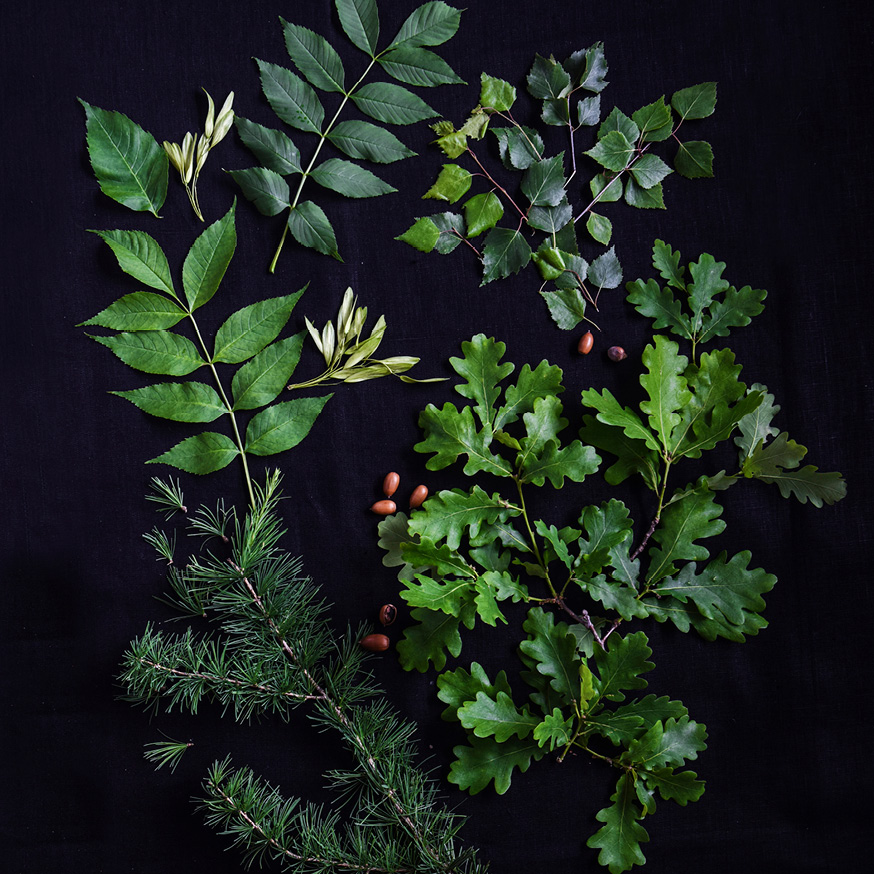
A third-party-verified EPD has been prepared for Timberwise multilayer parquet flooring. According to the EPD published in 2024, 97% of the raw materials used in the multilayer parquet flooring are bio-based.
Wood absorbs carbon as it grows, and this carbon remains stored in the wood product throughout its service life. In addition, the long lifespan of parquet flooring and the possibility of refinishing it support long-term use. A durable floor is not a short-term choice, but part of the home for many years to come.
Timberwise’s EPD also helps present the product’s environmental impacts in a consistent way. It adds precision to sustainability communication and provides a stronger basis for product development.
How should Timberwise’s figures be interpreted?
The figures presented in an EPD are based on precisely defined system boundaries and calculation rules. They should therefore always be interpreted in relation to the product’s intended use, the life cycle stage being assessed and the underlying assumptions.
Timberwise has also commissioned product-specific carbon footprint assessments to examine the climate impacts of individual parquet products in greater detail. The purpose of these assessments is to help identify the stages of the life cycle in which emissions arise and where development efforts can have the greatest impact.
Comparisons as indicative background information
In the carbon footprint assessment carried out for Timberwise Snöhetta parquet flooring, the product’s climate impact was lower than that of the reference laminate used in the same assessment. In published sector-level EPDs for ceramic tiles, emissions from the production stage have, in turn, been higher than the production-stage value reported for multilayer parquet flooring in Timberwise’s 2024 EPD.
It is important to note, however, that the figures for different materials are based on different products, system boundaries, time periods and, in some cases, different calculation assumptions. They should therefore not be interpreted as a direct like-for-like comparison. Nevertheless, they provide useful indicative information suggesting that, based on the published data, Timberwise’s wood-based parquet products have a low climate impact, particularly during the production stage.
- Timberwise EPD: GWP-total for multilayer parquet flooring, A1–A3: 1.06 kg CO₂e/m²
- Timberwise Snöhetta assessment: 3.61 kg CO₂e/m²
- Reference laminate in the same assessment: 19.73 kg CO₂e/m²
- Published sector-level EPD for ceramic tiles: A1–A3 value approximately 11.0 kg CO₂e/m²

Materials and Origin
Timberwise parquet flooring is made from genuine wood. Our material choices emphasise traceability, responsible sourcing and a long service life. The wood raw material we use is certified and therefore traceable.
We do not use endangered wood species. Instead, we use colour treatments and a range of surface options to offer a broad palette of shades using certified raw materials. This allows us to provide greater visual variety without compromising on responsible material choices.
Genuine wood is a natural material whose value is also evident in everyday use. A wooden floor ages gracefully, can be maintained and, when necessary, sanded and refinished. This makes it a long-lasting material choice for both homes and public spaces.
Indoor Air Quality and Product Safety
Flooring is one of the largest surfaces in a home, which means that its materials and surface treatments play an important role in indoor air quality and living comfort. Timberwise has made product safety one of its key quality criteria.
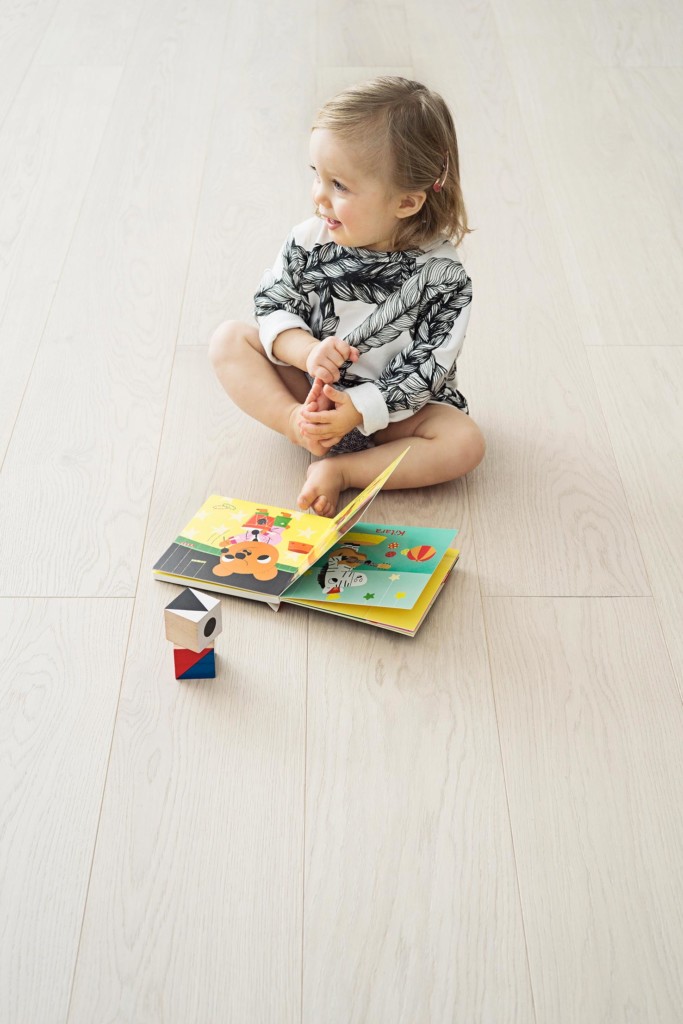
Timberwise uses completely formaldehyde-free adhesive in all its products. Formaldehyde is one of the chemicals that can affect indoor air quality, which is why avoiding it is an important part of safe product design. Particleboard has traditionally been a major source of formaldehyde, but formaldehyde may also be emitted from laminate flooring, parquet and panels if adhesives containing formaldehyde have been used in their manufacture. Even at low concentrations, formaldehyde may irritate the eyes and upper respiratory tract, and it has been suspected of being associated with asthma symptoms. These factors are particularly important in families with young children who crawl and play on the floor.
Timberwise parquet flooring has been awarded the M1 classification, indicating low emissions for indoor environments. The products have also been granted the Finnish Allergy, Skin and Asthma Federation’s Allergy Label. These certifications support our aim of making wooden flooring a safe choice for everyday life at home, including when people play, relax and spend time on the floor each day.
The products also meet the requirements of demanding emission standards, and their properties are tested regularly. For us, safety is not a separate added feature, but an essential part of product quality.
Certificates and Documents
Timberwise parquet flooring has been awarded several certificates and labels relating to environmental impacts, product safety, Finnish origin, quality and technical properties. Some demonstrate responsible sourcing and low emissions, while others confirm the product’s compliance with technical requirements.
Certificates
The table below lists the certificates awarded to Timberwise parquet flooring, together with the related downloadable documents. Unless an expiry date is stated separately, the certificate remains valid until further notice.
| Certificate | Description | Document | |
 |
EPD Environmental Product Declaration | An Environmental Product Declaration (EPD) provides information on the environmental impacts of a product or process throughout its life cycle. It is based on a life cycle assessment and prepared in accordance with the EN 15804 standard. | Load document |
 |
Finnish Key Flag | Timberwise Oy has been awarded the Key Flag Symbol, indicating that the product is manufactured in Finland and has a domestic content of at least 50%. | Load certificate |
 |
Finnish Allergy, Skin and Asthma Federation | Safe, emission-free products contribute to better indoor air quality and help reduce the risk of allergic reactions. Timberwise is the only wood flooring manufacturer to have been awarded the Allergy Label.. | Load certificate |
|
NO ADDED FORMALDEHYDE |
Timberwise is the first parquet flooring manufacturer in the world to use completely formaldehyde-free adhesives and surface treatment products across its entire product range. Formaldehyde can impair indoor air quality. | ||
 |
Design from Finland | Timberwise’s desigN parquet flooring created by Finnish designers, as well as its Twise products, have been awarded the Design from Finland mark, which recognises Finnish design and the importance of intangible work. | Load certificate |
 |
M1 | Materials used in indoor spaces are classified according to their emissions, and Timberwise parquet flooring has achieved the highest M1 classification. | Load certificate lacquered products wax oiled products |
 |
PEFC | Timberwise has been awarded PEFC certification. The certification ensures that the wood comes from sustainably managed forests, where more trees are planted than harvested. | Load certificate |
 |
Real Wood | Timberwise-parquets are genuine wood | Load certificate |
 |
National Wood Flooring Association | Timberwise Oy is a member of the NWFA. The NWFA is a non-profit international organisation whose mission is to promote quality standards for genuine wood flooring. | Load certificate |
| JAS1 | Japanese Agricultural Standards – Glue joint testing method | Our products are tested in accordance with the JAS1 standard. During the boiling test, no adhesive bond failures or surface delamination occur, demonstrating that the parquet flooring performs reliably under varying conditions. | |
| JAS F**** | Japanese Agricultural Standards – Emission standard | Timberwise products meet the requirements of the industry’s most stringent emission standards. Their formaldehyde emission rating is JAS F****, the lowest possible classification. | |
 |
CE-marking | The CE marking indicates that a product complies with EU requirements. For Timberwise parquet flooring, it confirms compliance with European quality standards. | Load certificate |
| DoP | Declaration of Performance | The Declaration of Performance is required for CE marking and specifies the product’s performance characteristics in accordance with regulatory requirements. | Load certificate |
| B(fl) S1 | Fire rating | An optional fire-retardant treatment upgrades Timberwise’s lacquered, glue-down birch plywood products to fire classification B(fl). Standard products have a fire classification of D(fl)-s1. | Load firerating C certificate Load firerating B-certificate |
 |
Antibacterial surface treatment | Timberwise is the first wood flooring brand in the world to offer an antibacterial treatment that enhances the elimination of bacteria. Available on request. | Load certificate
|
Environment and Sustainability
This category includes, for example, the EPD, PEFC certification, the Key Flag Symbol and the Design from Finland mark. Together, they support Timberwise’s commitment to sustainability, Finnish origin, traceability and transparent environmental communication.
Indoor Air Quality and Safety
This category includes, for example, the Allergy Label, M1 classification, JAS F**** and information relating to formaldehyde-free products. These indicate the products’ low emissions, safety and suitability for indoor use.
Technical Approvals and Product Information
This category includes, for example, CE marking, the Declaration of Performance (DoP), fire classifications, JAS1, antibacterial surface treatment, NWFA membership and the Real Wood mark. These relate to the product’s technical properties, compliance with standards and intended applications.
For us, sustainability means that parquet flooring should feel good not only underfoot, but also in terms of the information behind it. That is why we want to bring together Finnish manufacturing, safe material choices, long-lasting products and verified environmental data as one coherent whole. This is how we have operated from the very beginning, since 1999, long before sustainability became a marketing and communications tool.