ABC Guide to choosing parquet
A floor is an investment you may feel beneath your feet for decades. That is why choosing the right flooring material is an important decision. We have gathered our tips on this page to help you choose the parquet floor that best suits your home with greater ease and confidence.
The ABC of Choosing Parquet Flooring — How to Find the Right Floor for Your Home
Choosing parquet flooring is a major decision, but the good news is that it does not have to be difficult. In this guide, we take you through the key factors step by step, from appearance and intended use to surface treatments and practical considerations.
Whether you are building a new home or renovating an existing one, this guide will help you make a choice that still feels right years from now.
- Consider the intended use — What kind of everyday life does the floor need to withstand?
- Choose the look — Shade, wood species and knot variation create the atmosphere.
- Select the surface treatment — How should the parquet look and feel in everyday use?
- Match it to your budget — Invest in the features that matter most to you.
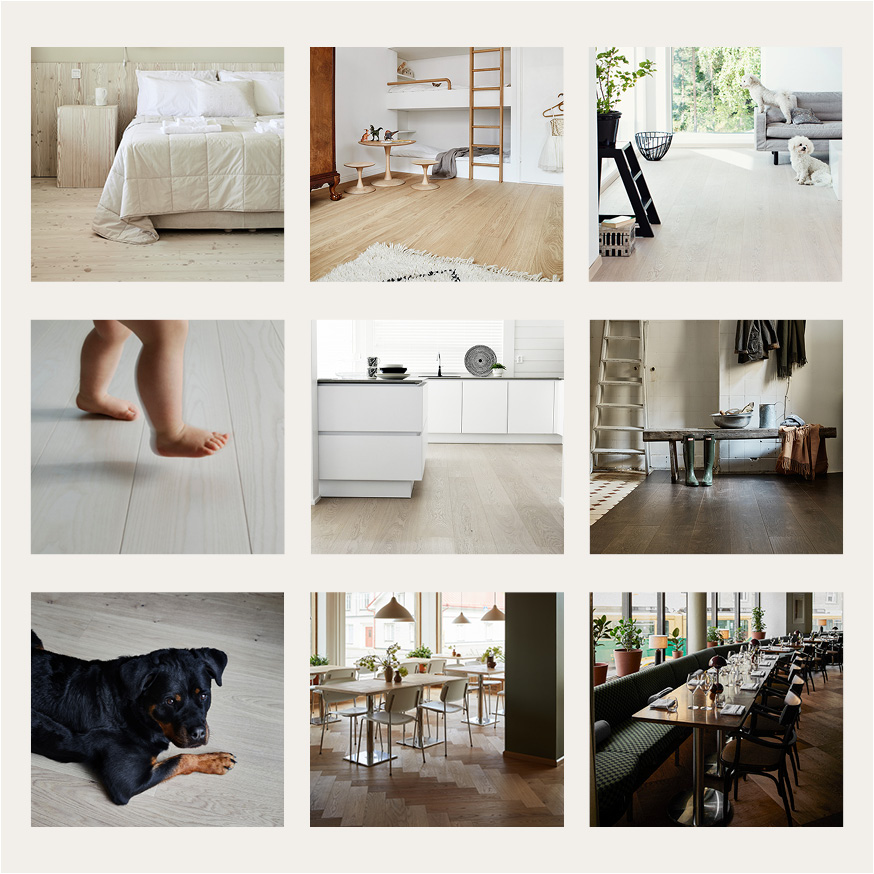
1) Which Room Is the Parquet Flooring For?
Before looking at shades or wood species, take a moment to think about everyday life. How the parquet will be used has a surprisingly significant impact on which option is best for you.
Ask yourself:
- Will the space be subject to heavy use, such as a hallway or kitchen?
- Are there children or pets in the household?
- Do you prefer an easy-care surface or the most refined finish possible?
Once you have identified how the floor will be used, choosing the right parquet becomes much easier.
2) Appearance — What Kind of Atmosphere Suits Your Home?
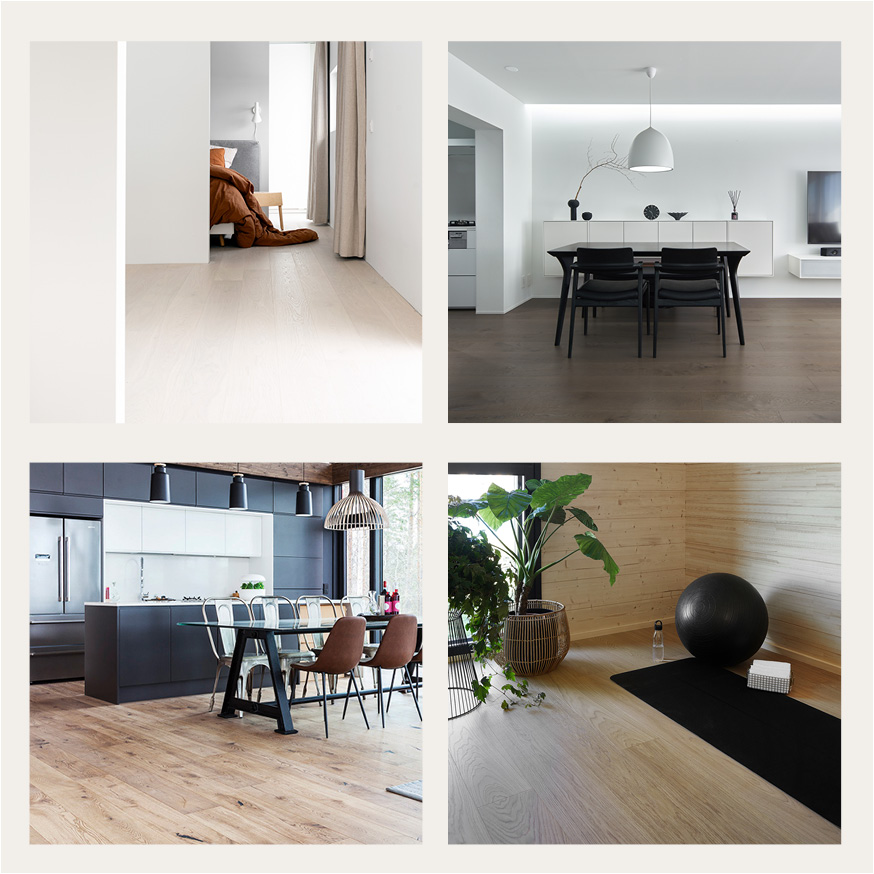
Parquet flooring has a major impact on the overall look of your home. The shade, wood species and amount of knotting determine whether the final result feels calm, lively, modern or classic.
Common choices:
- Light-coloured parquet makes a space feel more open and fresh.
- Darker shades add warmth and a sense of elegance.
- Parquet with more knots creates a natural and lively appearance.
- Parquet with fewer knots has a calm and timeless look.
3) Choose the Wood Species
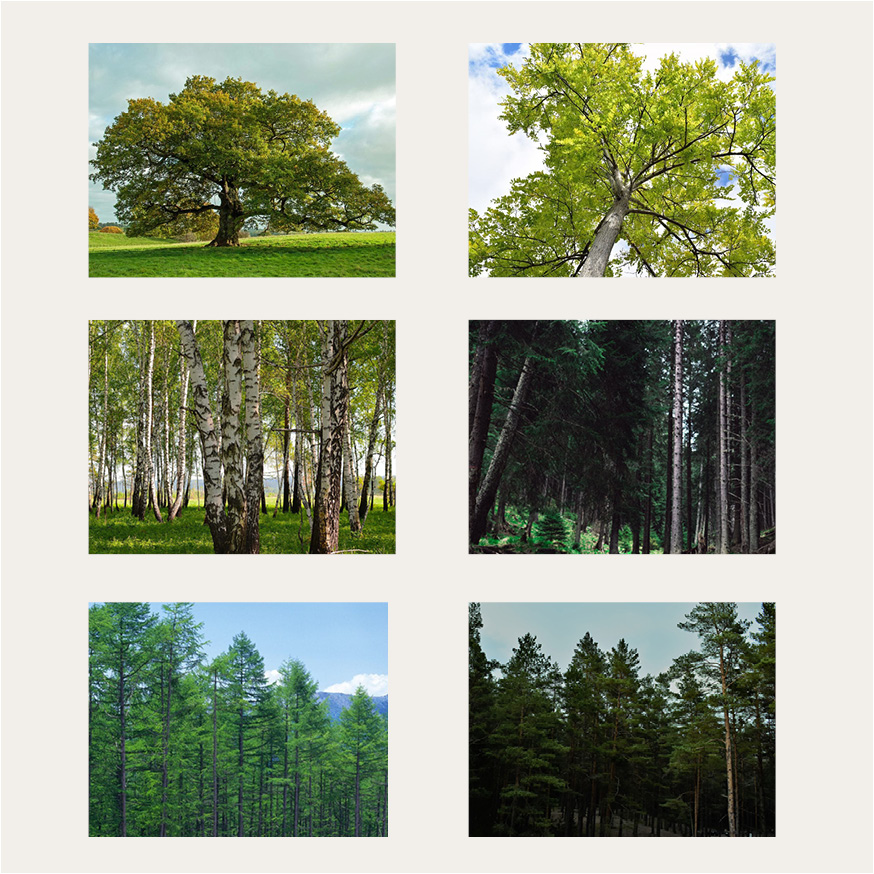
The wood species has the greatest impact on the appearance of the floor, how well it withstands everyday use and the final price of your flooring. The available options include oak and ash as hardwoods, birch as a deciduous wood, and Douglas fir, larch and pine as softwoods.
Hardwoods are better suited to heavier wear and can also be used in public spaces, while birch and softwoods are more suitable for areas with lighter use. It is therefore best to consider how the space will be used before choosing the appearance. The choice of wood species also affects the price.
4) Choose the Grade, or Level of Knotting
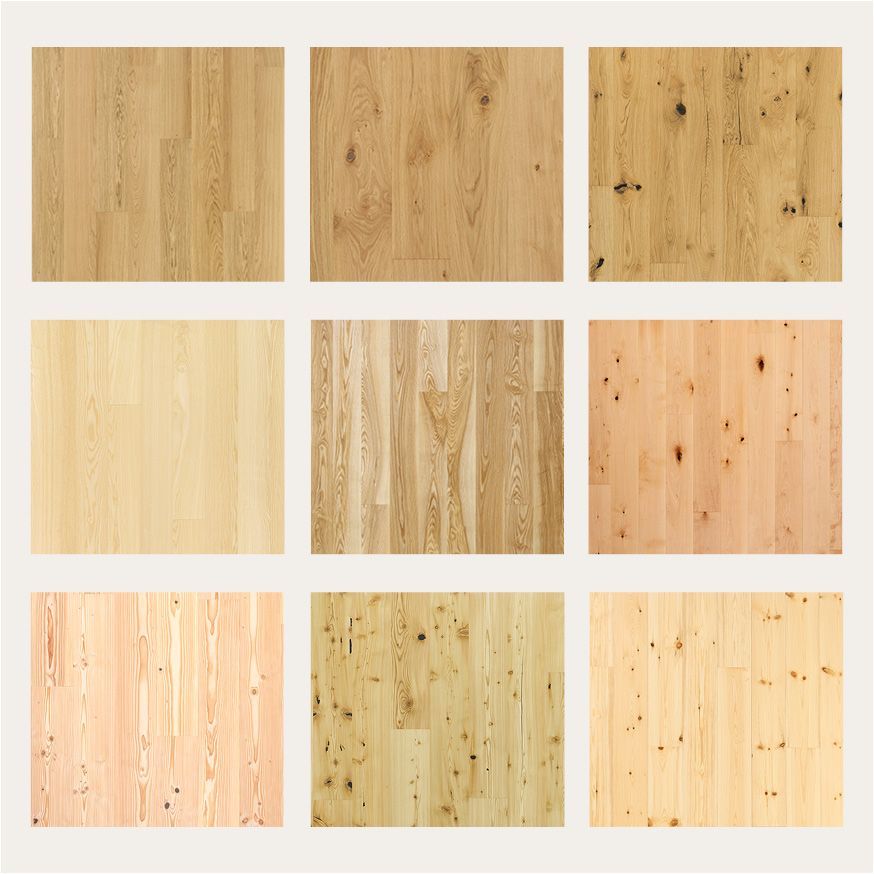
The grade, or level of knotting, indicates how much natural colour variation and how many knots are visible in the wood. It primarily affects the appearance of the parquet.
Select — an almost knot-free, calm appearance
Classic / Natural — natural, balanced and lightly knotted
Vintage / Olive — more lively, knotty and rustic in character
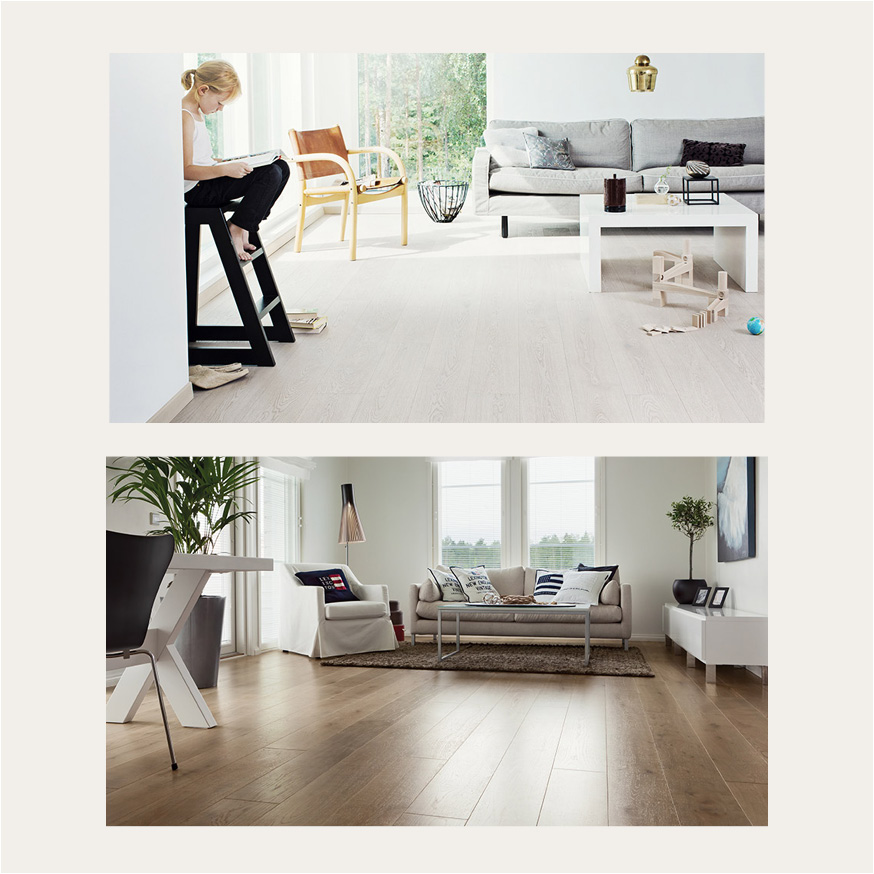
5) Choose the Surface Treatment — How Will the Parquet Feel in Everyday Use?
The surface treatment affects how the parquet looks and feels, as well as how easy it is to maintain. It is not only about appearance, but also about how the floor performs in everyday life. You can choose between an UV-cured hardwax oil finish and a lacquer finish.
Hardwax-oiled surface — natural and full of character:
Offers the authentic feel, warmth and appearance of real wood. Minor marks can be repaired locally, and the surface is easy to care for and maintain. The finish is almost matt.
Lacquered surface — an easy-care choice:
Durable and highly resistant to wear, easy to keep clean, and traditional and familiar in appearance. The finish has a subtle gloss.
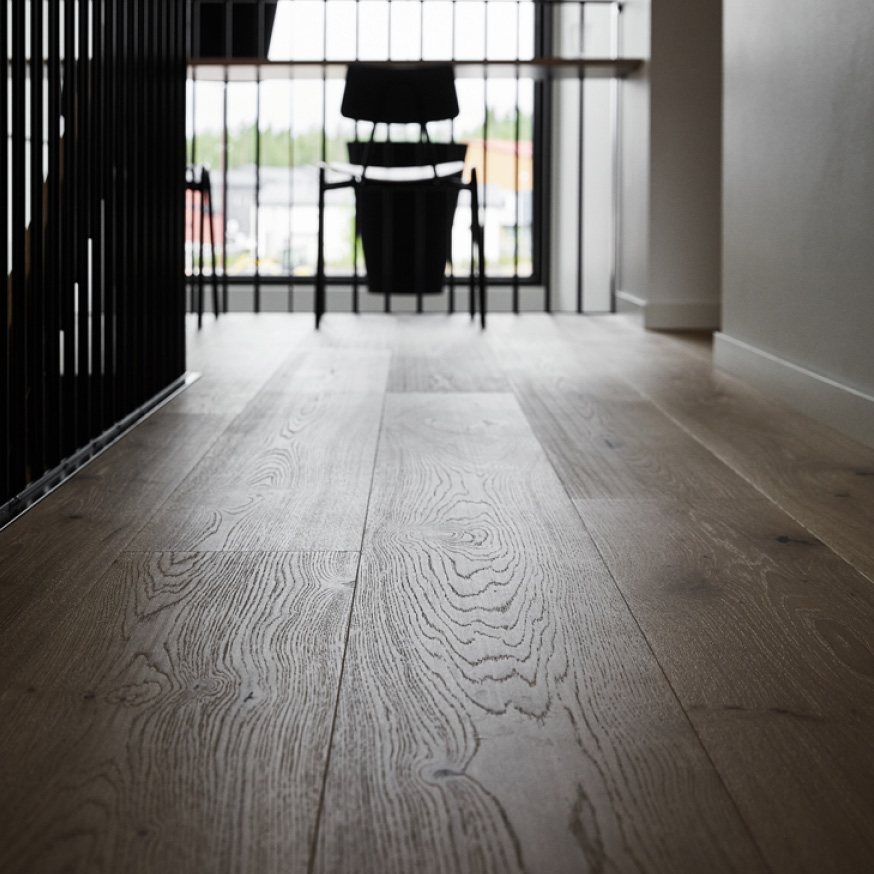
6) Surface Texture — Brushed or Sanded?
What type of surface texture feels most suitable for you? Would you like to feel the natural grain of the wood underfoot, or do you prefer a smooth surface? In most cases, you can choose between a brushed and a sanded finish.
Brushed surface — highlights the natural grain of the wood, feels more textured underfoot, and often helps minor signs of wear blend into the surface more discreetly.
Sanded surface — smoother and more traditional, but slightly more slippery than a brushed surface. Scratches may also be more visible.
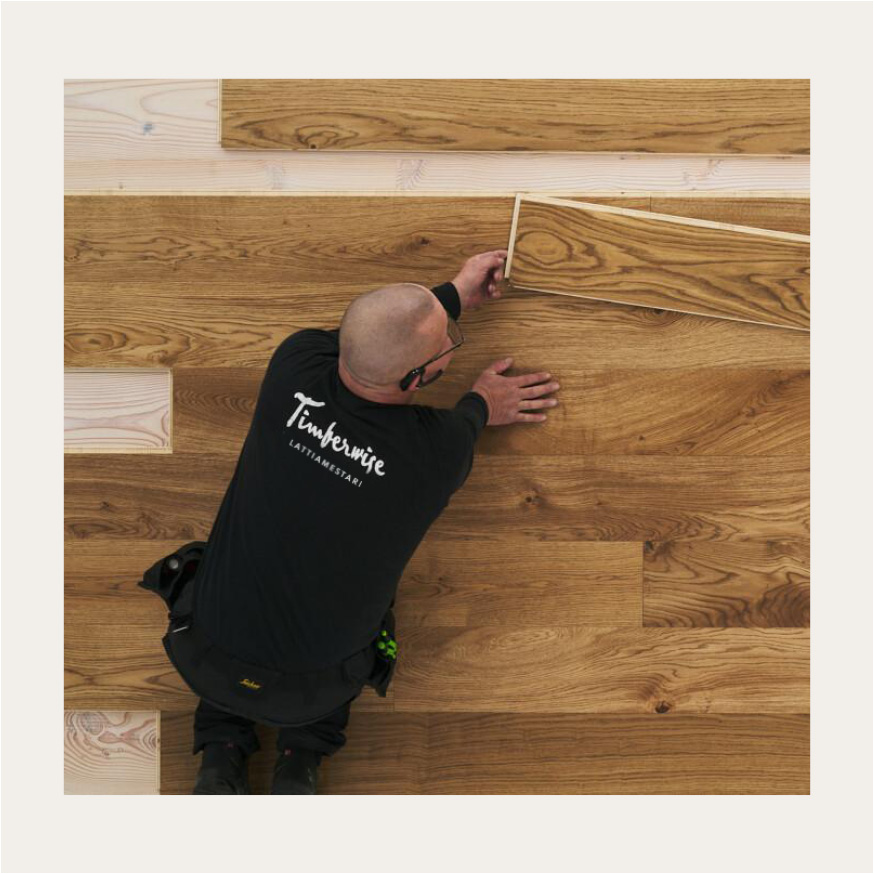
7) Choose the Best Installation Method for the Space
Finally, it is important to choose an installation method that suits both the space and your budget. Our floors can be installed as a floating floor using either a click-lock joint or a traditional tongue-and-groove joint with adhesive. They can also be fully bonded to the subfloor. Both joint options can be installed either as a floating floor or glued directly to the subfloor.
For example, full-surface bonding is recommended for large, continuous spaces without skirting boards. Our patterned parquet floors must also always be glued directly to the subfloor. DIY installers, on the other hand, can install a click-lock floor as a floating floor themselves.
You Are Now Ready to Explore Our Product Range
You are now ready to take a closer look at our product range and choose the wooden floor that best suits you.
Below, you will find more information and links related to the key topics covered above. Remember, however, that you do not need to know everything straight away. It is often enough to have a general idea of the look you prefer and the level of wear the floor needs to withstand. Our experts will help you move forward in choosing the floor for your life.
See and Feel the Parquet Before Making Your Decision
- The shade changes depending on the lighting.
- The surface feels different underfoot.
- The overall look is easier to assess in your own space.
We therefore recommend viewing colour samples in your own home before making the final decision. You can also test our different flooring options in your own home or project using our AI-powered AI Visualiser service. After that, you can find the nearest retailer in our nationwide dealer network.
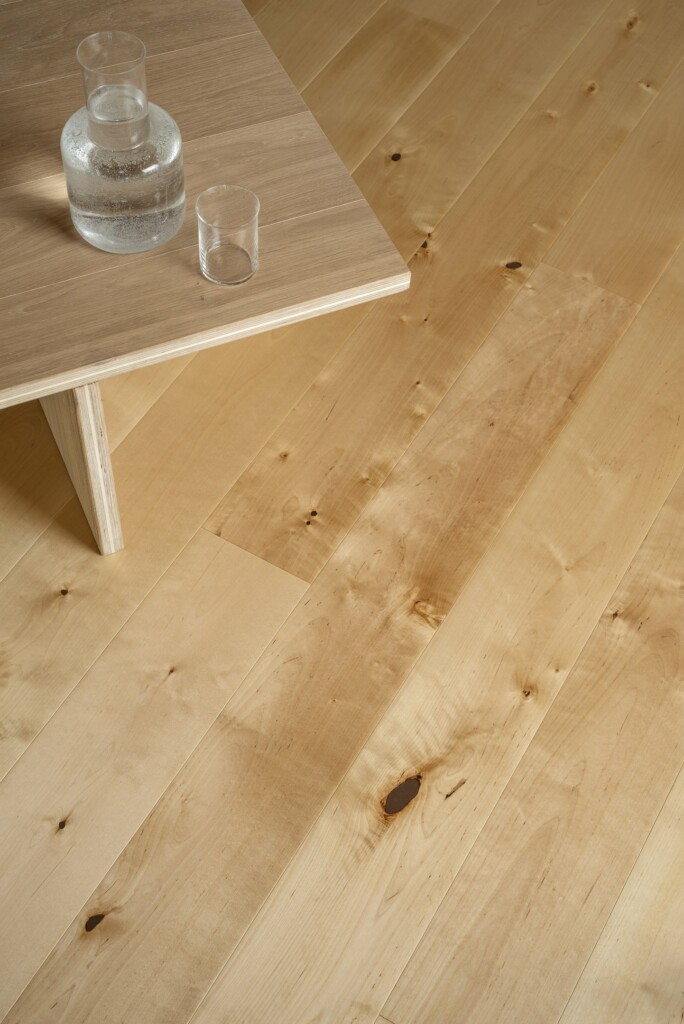
A) Explore Our Extensive Collection
We manufacture plank parquet flooring for people who value natural materials, safety and high-quality Finnish craftsmanship. Timberwise stands out from other parquet floors through its wide plank appearance, subtle bevels on all four sides, versatile colour and surface treatment options, and beautiful designer patterns.
Our unique three-layer construction with a birch plywood core also ensures a strong, stable and even floor.
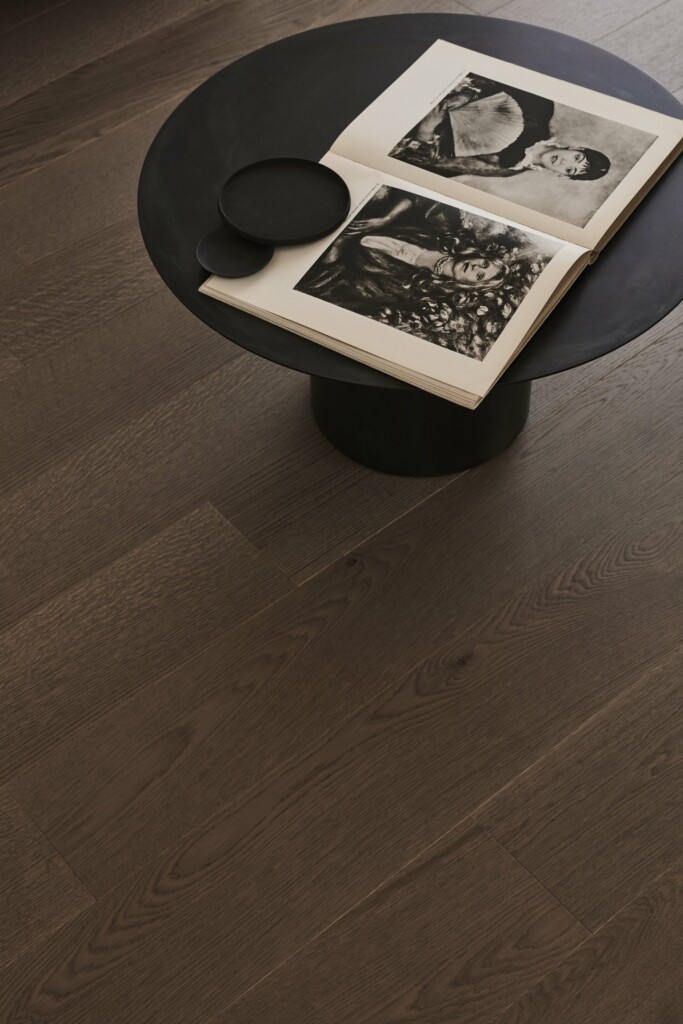
B) Order a Colour Sample Delivered to Your Home
When choosing between different colours and wood species, it is worth ordering colour samples of your preferred options. They can be delivered to your home quickly and conveniently.
We always recommend ordering at least two of your favourite colours and comparing them side by side. It is much easier to understand the differences between shades when you have something to compare them with.
We also recommend viewing the samples in the actual space and lighting where the floor will be installed.
How Is the Price of Timberwise Parquet Flooring Determined?
Our high-quality parquet collection offers a wide range of options, helping you find the right solution for your home. By understanding the factors that affect the price of parquet flooring, you can make an informed decision that suits both your budget and the intended use of the space.
Wood Species
The first major factor affecting the price is the chosen wood species. Hardwoods such as oak and ash are generally slightly more expensive than softwoods, but they also offer excellent durability and strength.
Softwoods such as pine and Douglas fir are more affordable, but signs of everyday life may become visible more easily over time. We therefore recommend considering both price and durability, and choosing the wood species according to the intended use of the space and the level of wear the floor will be exposed to.
Grade, or Level of Knotting
Another important factor affecting the price is the chosen grade, or level of knotting.
The Select grade, which is almost knot-free, is always more expensive than grades with more knots. Classic, a lightly knotted grade, offers a mid-priced option and creates a naturally balanced floor surface.
Vintage, which has more knots, is the most affordable option. It is also a highly sustainable choice, as this grade makes use of all parts of the wood rather than only the most uniform sections.
Plank Parquet or Patterned Design Parquet, and Plank Width
The width of the plank has a direct effect on the price of the floor. The wider the product, the more expensive it is, as wide raw material suitable for single-strip planks is less readily available.
The style of the floor also affects the price. Plank parquet is often more affordable than design patterned parquet because the manufacturing processes differ. Producing patterned parquet requires particular precision, more handcraftsmanship and a more complex, multi-stage production process.
Floor Installation
Although the installation method does not directly affect the price of our products, it does affect the total cost of the parquet floor.
For example, installing a floating plank floor is more affordable than installing a floor with glued tongue-and-groove joints. A plank floor that is fully bonded to the subfloor costs more to install, but the result is more stable and less affected by changes in humidity.
Full-surface bonding also allows installation without skirting boards, thresholds or breaks between spaces. Patterned parquet must always be glued directly to the subfloor and is more expensive to install because the work is slower and requires particular precision.
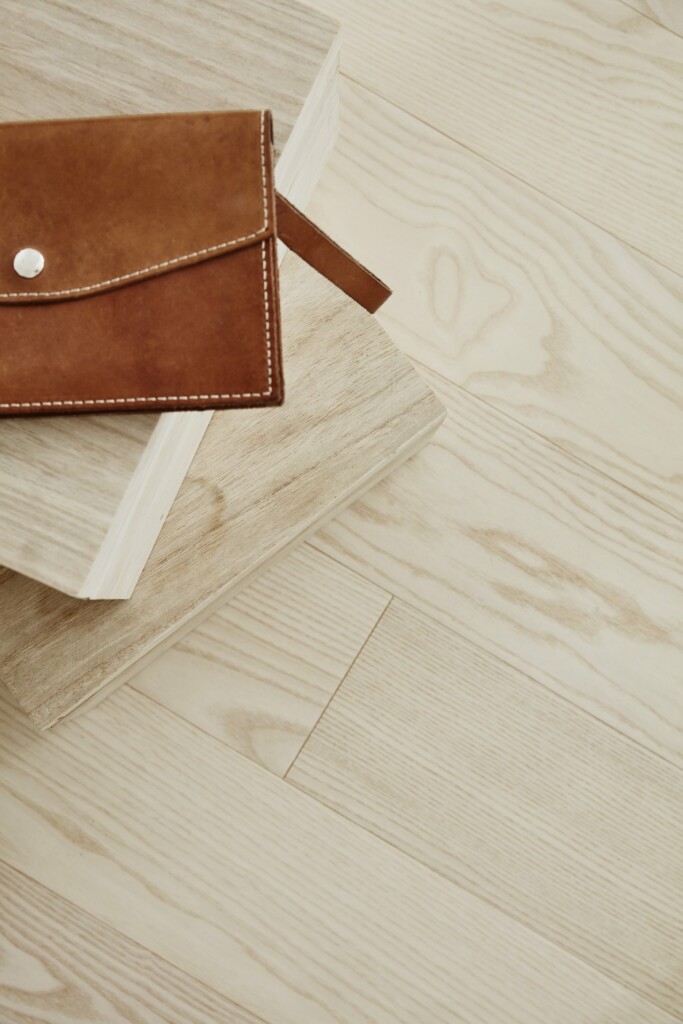
C) Find Your Nearest Retailer
Once you have chosen your preferred product and shade, find your nearest Timberwise retailer and order the flooring for delivery directly to your home or installation site. You can also visit our showrooms in Finland – Helsinki, Tampere, Turku and Jyväskylä.
Our experienced experts will help you find the parquet floor that best suits your home. You can also choose to arrange all parquet flooring services under one roof, from planning your space and selecting the floor to ordering and installation.
How to Recycle Your Colour Samples
You can recycle the colour samples you ordered using whichever option is most convenient for you:
- Take the samples to your nearest Timberwise retailer. You can find a list of our retailers here
- As the colour samples are safe for indoor air, they can be burned in a fireplace or sauna stove.
- Take the samples to a waste collection station together with other construction waste.
- Small quantities of colour samples can be disposed of as energy waste or mixed waste.
Do You Have Any Questions?